


The warning signs to watch for, the steps to take in the first few minutes, and how Alpha Vet Clinic supports pet owners across Dubai when urgent care is needed.
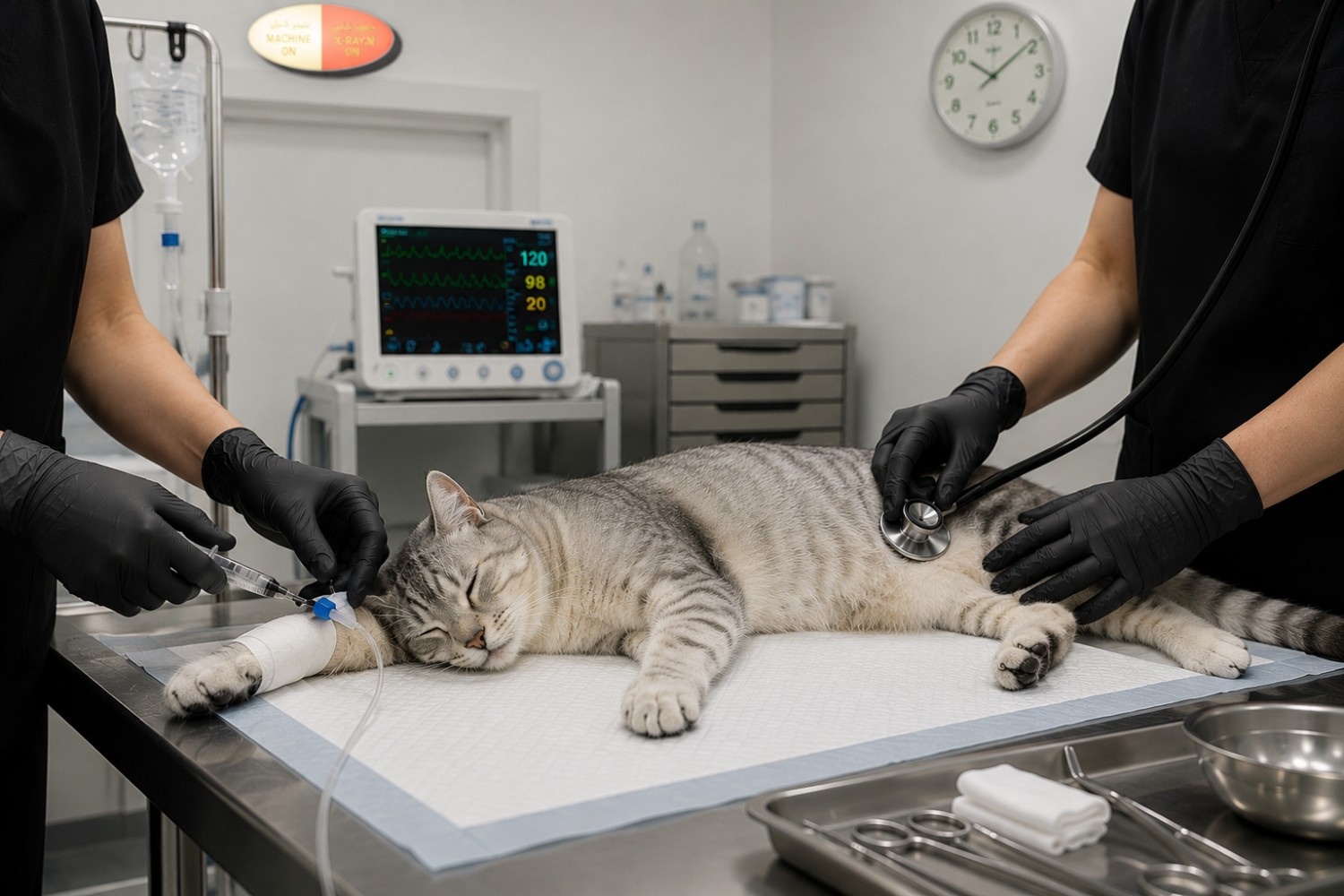
Pet emergencies never happen at a convenient time. One moment your dog or cat seems fine, and the next moment they are in visible distress. In these situations, knowing what counts as a true emergency and acting quickly can make the difference between a fast recovery and a serious complication. This guide walks you through the warning signs to watch for, the steps to take in the first few minutes, and how Alpha Vet Clinic supports pet owners across Dubai when urgent care is needed.
Not every symptom requires a rushed visit to the clinic, but certain signs should never be ignored. If you notice any of the following in your dog or cat, treat it as an emergency and seek veterinary help immediately.
Labored breathing, choking, gasping, or gums that look pale or blue are all signs that your pet is not getting enough oxygen. This can be caused by an obstruction, an allergic reaction, heatstroke, or a heart or lung condition. Any of these situations calls for immediate attention.
If your pet has been hit by a car, has fallen from a height, has a deep wound, or shows signs of a orthopedic injury, treat it as an emergency even if the animal appears calm afterward. Internal injuries are often not visible right away and can worsen quickly without treatment.
Seizures, sudden weakness, disorientation, or loss of consciousness point to a neurological or systemic problem that needs urgent evaluation. The sooner a vet examines the animal, the easier it is to identify the cause and begin treatment.
Bleeding that does not slow down after a few minutes of gentle pressure is a medical emergency. Apply light pressure with a clean cloth on the way to the clinic if it is safe to do so.
Household cleaning products, certain plants, pesticides, chocolate, grapes, and some human medications are toxic to pets. If you suspect your pet has eaten something harmful, do not wait for symptoms to appear. Early treatment often prevents lasting organ damage.
A swollen, hard abdomen combined with restlessness, unproductive retching, or obvious pain can indicate a condition such as gastric torsion, which is life threatening and requires immediate surgery in many cases. This condition is seen most often in large, deep chested breeds, so owners of these dogs should be especially alert to the signs.
Extreme lethargy, sudden aggression, hiding, or a rapid change in normal behavior can be an early sign that something is seriously wrong, even before more obvious symptoms appear.
If you are unsure whether your pet symptoms count as an emergency, call the clinic and describe what you are seeing. The team can advise you right away on whether immediate care is needed.
Staying calm helps you think clearly and helps keep your pet calm as well. Here is a simple sequence to follow.
Living in Dubai brings a few emergency risks that are more common here than in cooler climates or less urban environments.
Many pet emergencies are time sensitive. Conditions such as internal bleeding, heatstroke, gastric torsion, and poisoning can worsen significantly within a short window. Pets are also instinctively good at hiding pain, which means an animal that seems only mildly unwell can be far sicker than it appears. Early evaluation by a veterinarian typically means less invasive treatment, a shorter recovery time, and a better overall outcome.
Pets hide pain by instinct, so the animal in front of you is often more unwell than it looks. Acting in the first few minutes is often what changes the outcome.Alpha Vet Clinic Team
Being prepared reduces panic and saves valuable time when every minute counts.
Alpha Vet Clinic in Dubai offers an on call doctor service for pet owners who need urgent guidance or care outside a routine appointment. The clinic is open every day from 8:00 AM to 9:00 PM, with the emergency on call service available beyond those hours for genuine emergencies. The clinic is equipped to handle a wide range of situations, from trauma and breathing difficulties to suspected poisoning and sudden collapse, with a team of experienced veterinarians across internal medicine, orthopedics, cardiology, and general surgery, including Dr. Waseem Yaqub in small animal internal medicine and Dr. Vladimir Vujicic in orthopedic surgery for trauma related cases.
When you contact Alpha Vet Clinic during an emergency, the team will ask a few quick questions about your pet condition so they can prepare before you arrive. On arrival, your pet will be assessed promptly, stabilized if needed, and guided through the appropriate next steps, whether that means diagnostics, hospitalization, or a straightforward at home recovery plan.
You can reach the Alpha Vet Clinic emergency line at (plus 971) 56 689 1655, or call the clinic landline at (plus 971) 4 298 7587. You can also visit the clinic on 2nd December Street in Dubai, or find more details and book online through the emergency care page. Valet parking and pick and drop service are available to make emergency visits as smooth as possible during a stressful moment.
If you are unsure, it is always safer to call the clinic and describe the symptoms. A member of the veterinary team can advise you on whether immediate care is needed.
Yes. Emergency cases are handled as they arrive, and calling ahead simply helps the team prepare for your pet specific needs.
Do not try home remedies such as inducing vomiting without professional guidance, since this can sometimes make the situation worse. Contact a veterinarian immediately and bring the packaging of the substance if possible.
Emergency care often involves additional diagnostics and immediate attention, which can affect cost. Discussing your pet condition and options with the clinic upfront helps you understand what to expect.
Heavy panting, drooling, weakness, vomiting, and collapse are common signs, particularly during Dubai hot months. Move your pet to a cool area and contact a vet right away if you notice these symptoms.
Pet emergencies are stressful, but knowing the warning signs and having a plan in place gives your pet the best possible chance at a fast and full recovery. Save the Alpha Vet Clinic emergency contact number today, so you are ready to act the moment it matters most.
